Why are so many people living with chronic illness today?
Chronic diseases like autoimmune conditions, allergic conditions, metabolic disorders, and certain gastrointestinal and respiratory conditions have become increasingly common. In fact, according to the Centers for Disease Control and Prevention (CDC), about 75% of Americans are living with at least one chronic illness.¹
While genetics, lifestyle, infections, and other factors can all contribute to developing a chronic illness, they may not tell the whole story.
One thing that's changed dramatically since the rise in chronic illness is our environment. We're now exposed to potentially harmful substances through our food, air, homes, workplaces, and personal-care products that were either absent or encountered much less in the past.
A growing area of research is asking whether some of these modern environmental exposures could be affecting one of the body's most important lines of defense: the epithelial barrier. This idea is known as the epithelial barrier theory.
What is the Epithelial Barrier and Why Does it Matter?
To understand the epithelial barrier theory, we first need to understand the epithelial barrier itself.
Epithelial cells form protective layers throughout the body. They make up the outermost layer of the skin and line areas including the digestive and respiratory tracts.
In many of these locations, epithelial cells form the boundary between the inside of our body and the outside world.
More Than Just a Protective Wall
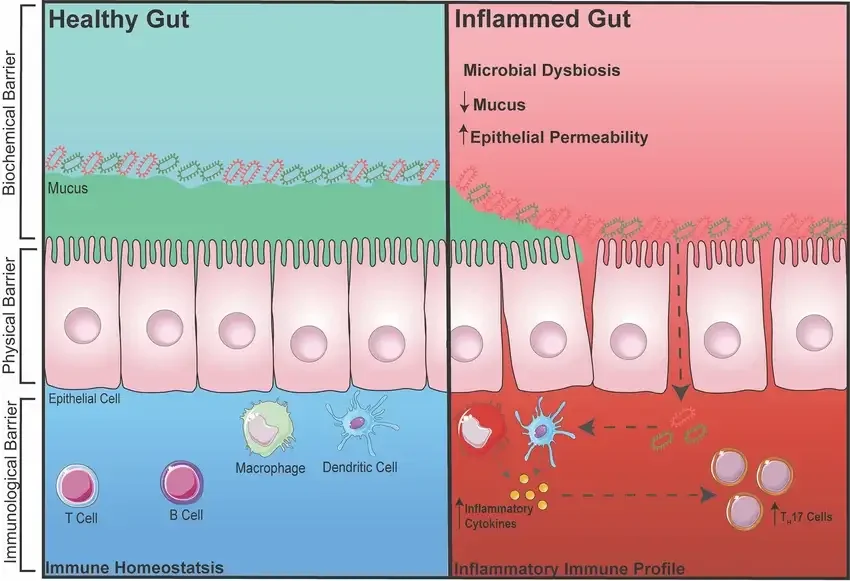
Healthy Gut, Healthy Bones: Targeting the Gut Microbiome to Promote Bone Health²
The epithelial barrier isn't a solid wall. Instead, it's a highly regulated surface that allows certain substances to cross while keeping potentially harmful substances and microorganisms out.
In a lot of ways, the epithelial barrier serves as a security checkpoint for the body.
Structures known as tight junctions help keep neighboring epithelial cells together and regulate what can pass between them. However, when these barriers become damaged, the body's security checkpoints can fail.
What is the Epithelial Barrier Theory?
The epithelial barrier theory proposes a potential connection between our increasingly modern environment and the rise in chronic disease. A major scientific review published in 2025 looked at the growing evidence behind this theory.³
Researchers proposed that certain modern environmental exposures can damage epithelial cells or interfere with the tight junctions between them. Once the barrier is compromised, substances that would normally remain out of the body may directly affect the immune system and lead to illness elsewhere in the body.
Rather than viewing the skin, gut, lungs, microbiome, and immune system as completely separate systems, the epithelial barrier theory looks at how they communicate with one another. And by looking at this, we can understand how disrupting one part of that relationship could affect the others.
What Happens When the Epithelial Barrier is Damaged?
The human body is remarkable, and we know it can heal from all sorts of injury and damage. So why does damage to this thin layer of cells matter so much?
The concern isn't necessarily a single episode of barrier damage. The epithelial barrier theory focuses more on what may happen when these barriers are repeatedly disrupted or damaged.
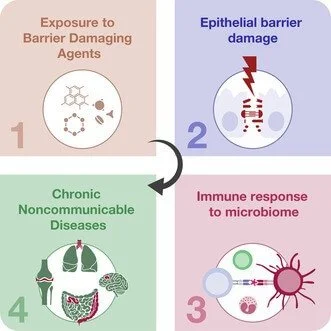
The epithelial barrier theory proposes a comprehensive explanation for the origins of allergic and other chronic noncommunicable diseases³
Barrier Damage Alerts the Immune System
One reason epithelial barrier health matters so much is because of its close relationship with the immune system.
When epithelial cells become injured or stressed, they release signals that tell the immune system that something is wrong. Some of these molecules are called alarmins because they function like alarm signals for the body.
This initially activates a part of our immune system called the innate immune system, which is our rapid first-line response to injury and potential threats.
Innate immune responses can then influence adaptive immunity, which is the more specialized branch of the immune system. Adaptive immunity learns to recognize specific threats and then develops a memory of them. This allows the body to respond more effectively if it encounters the same threat again.
These responses are normally protective. However, repeated epithelial barrier injury and ongoing immune signaling may cause the immune system to become inappropriately overactive. In some people, this may lead to inflammation and chronic disease.
Barrier Damage May Also Affect the Microbiome
Epithelial barriers are also closely connected to the microbiome. The microbiome is the community of bacteria, fungi, and viruses that live in and on our bodies.
These microorganisms communicate with both epithelial cells and the immune system. When an epithelial barrier becomes altered or damaged, the microorganisms living there may be affected. An unfavorable change in these microorganisms is called dysbiosis.
This relationship can work in both directions: barrier dysfunction may alter the microbiome, while changes in the microbiome may influence epithelial barrier and immune function.
How Our Modern Environment Affects Our Epithelial Barriers
Human environments have changed dramatically in a relatively short period of time.
Think about it.
Just a few generations ago, people ate far fewer highly processed foods, used fewer chemicals and fragrances in their homes, and weren't exposed to many of the pollutants and harmful substances that are common today.
Industrialization and modern living have introduced numerous substances into our food, air, homes, workplaces, and personal-care routines. In fact, since the 1960s, we’ve been exposed to over 350,000 toxic substances.⁴
When these substances are in our environments, they can come into contact with our epithelial surfaces:
Airborne substances → the respiratory tract
Food additives → the stomach and intestines (gastrointestinal tract)
Products we use on our skin → the skin
Let's take a look at some of the most common environmental toxins and how they can affect our bodies.
Detergents and Surfactants
Surfactants are chemicals that help oils and water mix. They're used widely in toothpaste, soaps, and cleaning products, and studies have shown that certain surfactants can directly affect the epithelial barrier.
In one study, researchers tested how epithelial cells respond to laundry detergents and also to detergent residue that's left after rinsing. They found disruptions to the epithelial barrier as well as changes in the body's immune response.⁵
Another study looked at how detergents like sodium dodecyl sulfate (SDS) affect epithelial barriers. This detergent is commonly found in household products like dish soap and toothpaste. In this study, exposure to SDS weakened the epithelial barrier in the esophagus (tube that connects the mouth to the stomach), increased inflammation, and altered the immune response.⁶
Air Pollution
The epithelial barriers in our sinuses and airways are constantly exposed to the air around us. And when there are pollutants in the air, the epithelial barrier can potentially become damaged.
Studies using human epithelial cells have found that pollutants such as diesel exhaust particles can affect epithelial barriers and increase inflammation.⁷⋅⁸
Another study found that air pollutants including pollen, greenhouse gases, and emissions lead to epithelial barrier dysfunction, dysbiosis, and an altered immune response.⁹
Fragrances and Poor Indoor Air Quality
When you walk into a room and smell something fruity, floral, or "fresh" in the air, chances are it's a man-made fragrance that is potentially harmful.
Certain substances in fragrances and scented products have been shown to cause stress and inflammation in the epithelial cells that line the lungs and airways.¹⁰
Concerns surrounding fragrance exposure have also gained attention from major medical organizations. In 2025, the American Medical Association (AMA) adopted a policy recognizing the potential impact of environmental exposures on people with fragrance sensitivities. The AMA also encourages organizations, including health care facilities, to implement fragrance-free policies.¹¹
This doesn't mean that every scented product is harmful. However, it does show that products designed to add scent and fragrance indoors can potentially damage and stress our epithelial barriers.
Food Additives and Emulsifiers
Researchers are also studying the effects of certain food additives on the intestines. There are over 4,000 food additives used in American food, so understanding how these additives affect our health is crucial.¹²
One study looked at carboxymethylcellulose (CMC). This is an emulsifier that's also called cellulose gum, and it's added primarily to thicken, stabilize, and bind food. It's commonly found in:
Frozen desserts
Ice cream
Baked goods
Sauces
Dressings
Fruit juices
Diet drinks
The study found that those who consumed a diet containing CMC had increased stomach discomfort after eating and unfavorable changes in their gut microbiome. Additionally, they found that two participants had findings concerning for gut inflammation.¹³
Another large review also found that emulsifiers can increase gut inflammation and alter the gut microbiome. This can lead to damage to the epithelial barrier and an increased risk of many chronic conditions and metabolic diseases.¹⁴
The same review also found that these types of food additives can alter the gut microbiome:¹⁴
Preservatives
Food colorants
Artificial sweeteners
What About Microplastics?
Microplastics are another increasingly studied substance.
In animal studies, exposure to microplastics has been associated with inflammation, damage to the gut epithelial barrier, and changes in the gut microbiome.¹⁵ Human studies are limited, but microplastic exposure is linked to epithelial barrier dysfunction. Additionally, high microplastic exposure has been linked to an increased risk of:¹⁶
Metabolic disorders: Fatty liver disease
Skin disorders: Allergies, contact dermatitis
Cancer: Lung, colorectal, pancreatic, blood, bladder
Lung disorders: Pneumonitis/bronchiolitis (inflammation of the lungs/airways)
Neurological disorders: Headaches, fatigue, dementia
Reproductive disorders: Decreased fertility, low newborn weight
Now this doesn't necessarily mean that encountering any one of these substances will cause disease. Instead, the epithelial barrier theory asks us to consider what may happen when our body is repeatedly exposed to these substances and whether this can explain the rise in chronic disease that we’re seeing today.
Could Epithelial Barrier Dysfunction Help Explain the Root Cause of Chronic Disease?
We typically think about chronic illnesses as separate diseases:
Asthma affects the lungs and airways
Atopic dermatitis affects the skin
Rheumatoid arthritis primarily affects the joints
Diabetes is a metabolic disorder
But the location where symptoms appear isn't necessarily the only place we should be looking.
The epithelial barrier theory proposes that some seemingly unrelated chronic diseases may share an underlying cause involving epithelial barrier dysfunction, environmental exposures, the microbiome, and immune function.
Now this doesn't mean that epithelial barrier dysfunction is the single root cause of chronic disease. Chronic illness is complex, and many factors like genetics, infections, nutrition, lifestyle, and other factors can influence whether or not disease develops.
Instead, epithelial barrier dysfunction may be one pathway through which several of these factors interact and ultimately cause disease.
What Does This Mean for Someone with a Chronic Disease or Chronic Illness?
The epithelial barrier theory is still evolving, and more research is needed to understand exactly how epithelial barrier dysfunction contributes to different chronic diseases.
Even as research continues, the current evidence we have reinforces an important principle: a diagnosis doesn't always tell us why someone became ill.
Two patients with the same diagnosis may have very different factors contributing to their illness, including different genetics, environmental exposures, microbiomes, dietary habits, lifestyles, and health histories.
One area I pay particular attention to is gut health.
The intestinal lining is an important epithelial barrier and is home to trillions of microorganisms that interact closely with both the intestinal lining and the immune system.¹⁷ Because of these connections, what's happening in the gut is relevant to the rest of the body.
This is why I take a step back and look at the bigger picture with each and every one of my patients. For many new patients at Wisdom Way Medicine in Portland, Oregon, this includes extensive bloodwork and gut testing.
One test I love to use to evaluate gut health is called the GI-MAP. This provides extensive information about the different amounts of microorganisms in the gut as well as markers related to inflammation, digestion, and immune health.
And gut health is just one piece of the puzzle. By looking at the many factors that influence our epithelial barriers, immune system, and overall health, we can start to develop a complete picture of what may be contributing to chronic illness.
Are You Living With a Chronic Illness?
If you've been diagnosed with a chronic illness or suspect that you may have one, you may benefit from taking a deeper look at all of the factors contributing to your health.
With over 20 years of experience caring for patients with complex and chronic conditions, Dr. Anne Hill at Wisdom Way Medicine takes a comprehensive, individualized approach to care. Rather than focusing on symptoms alone, she looks at the bigger picture to better understand what may be contributing to your health conditions and works with you to find opportunities to support your path to healing.
If you're ready to take a deeper look at your health, schedule an appointment with Dr. Anne Hill today.
FAQs: Chronic Disease Causes
-
A chronic disease is a health condition that lasts for an extended period of time and often requires ongoing management. Examples include:
Heart disease
Diabetes
Autoimmune diseases like lupus and rheumatoid arthritis
Chronic lung conditions like asthma, COPD, and emphysema
Certain GI conditions like inflammatory bowel disease
Skin conditions like atopic dermatitis
-
Risk factors for developing a chronic disease vary depending on the condition but may include:
Genetics
Age
Diet, including poor nutrition
Physical inactivity
Smoking
Excessive alcohol use
Certain infections
Environmental exposures
Researchers are also investigating how factors like the microbiome, immune system health, and epithelial barrier health may contribute to certain chronic diseases.
-
You can't control every risk factor, but here are some ways you can support your health in general:
Eat a nutrient-dense diet
Exercise regularly
Get adequate sleep
Avoid tobacco products
Limit alcohol
Reduce your exposure to harmful environmental substances
Additionally, regular preventive medical care with your primary care physician or functional medicine provider can help identify health concerns and risk factors early.
-
Dr. Anne Hill at Wisdom Way Medicine specializes in complex and chronic illness, including:
Chronic digestive disorders like small intestinal bacterial overgrowth (SIBO)
Chronic viral and tick-borne illnesses
Environmental illnesses
EDS and hEDS
Mast cell activation syndrome (MCAS)
Postural orthostatic tachycardia syndrome (POTS)
Long COVID
She works with both adults and children, including patients with multiple diagnoses or persistent symptoms without a clear diagnosis.
-
Whether a chronic disease can be reversed depends on the condition and the individual. While some chronic diseases require lifelong management, undercovering and addressing factors that may be contributing to illness may help improve symptoms, support overall health, and potentially slow disease progression.
References:
1. About Chronic Diseases – (cdc.gov)
2. Healthy Gut, Healthy Bones: Targeting the Gut Microbiome to Promote Bone Health – (researchgate.net)
3. The epithelial barrier theory proposes a comprehensive explanation for the origins of allergic and other chronic noncommunicable diseases – (nih.gov)
4. The epithelial barrier: The gateway to allergic, autoimmune, and metabolic diseases and chronic neuropsychiatric conditions – (sciencedirect.com)
5. Laundry detergents and detergent residue after rinsing directly disrupt tight junction barrier integrity in human bronchial epithelial cells – (nih.gov)
6. Detergent exposure induces epithelial barrier dysfunction and eosinophilic inflammation in the esophagus – (nih.gov)
7. Diesel exhaust particle exposure reduces expression of the epithelial tight junction protein Tricellulin – (nih.gov)
8. Diesel exhaust particle exposure exacerbates ciliary and epithelial barrier dysfunction in the multiciliated bronchial epithelium models – (nih.gov)
9. Air pollutants contribute to epithelial barrier dysfunction and allergic diseases – (nih.gov)
10. Exposure to selected limonene oxidation products: 4-OPA, IPOH, 4-AMCH induces oxidative stress and inflammation in human lung epithelial cell lines – (sciencedirect.com)
11. Fragrance Regulation H-135.902 — (ama-assn.org)
12. The Impact of Food Additives on the Abundance and Composition of Gut Microbiota – (nih.gov)
13. Randomized Controlled-Feeding Study of Dietary Emulsifier Carboxymethylcellulose Reveals Detrimental Impacts on the Gut Microbiota and Metabolome – (nih.gov)
14. Chronic consumption of food-additives lead to changes via microbiota gut-brain axis – (sciencedirect.com)
15. Exposure to Polypropylene Microplastics via Oral Ingestion Induces Colonic Apoptosis and Intestinal Barrier Damage through Oxidative Stress and Inflammation in Mice – (nih.gov)
16. The potential impact of nano- and microplastics on human health: Understanding human health risks. – (sciencedirect.com)
17. Diversity of bacteria within the human gut and its contribution to the functional unity of holobionts – (nih.gov)