Have you ever stood up and suddenly felt dizzy, lightheaded, or like your heart was racing? Or maybe you've had unexplained symptoms like fatigue, brain fog, or digestive problems?
While these symptoms can have many causes, they may sometimes be linked to a condition called dysautonomia, which affects the autonomic nervous system.
One type of dysautonomia is postural orthostatic tachycardia syndrome (POTS), a condition estimated to affect about 0.1-1% of the American population.¹ Despite its prevalence, POTS can be difficult to recognize because its symptoms overlap with many other medical conditions.
So, what exactly causes POTS, and how can you tell if it's responsible for your symptoms?
Let's take a closer look at the relationship between POTS and dysautonomia, including the potential causes, how it's diagnosed, and what you can do to manage symptoms.
What is Dysautonomia?
Dysautonomia is an umbrella term used to describe conditions that affect a part of our nervous system called the autonomic nervous system (ANS).
The ANS is responsible for controlling involuntary body functions such as:²
Heart rate
Blood pressure
Digestion
Breathing
Body temperature
Sweating
Bladder function
The ANS has two primary branches: the sympathetic nervous system, which prepares the body to respond to stress (AKA the fight-or-flight response), and the parasympathetic nervous system, which supports rest, digestion, and recovery.²
When these systems aren't working properly, the body may struggle to regulate certain bodily processes. This can lead to symptoms that affect multiple organ systems -- not just the heart.
As shown in the image below, dysautonomia includes several different conditions, including postural orthostatic tachycardia syndrome (POTS).
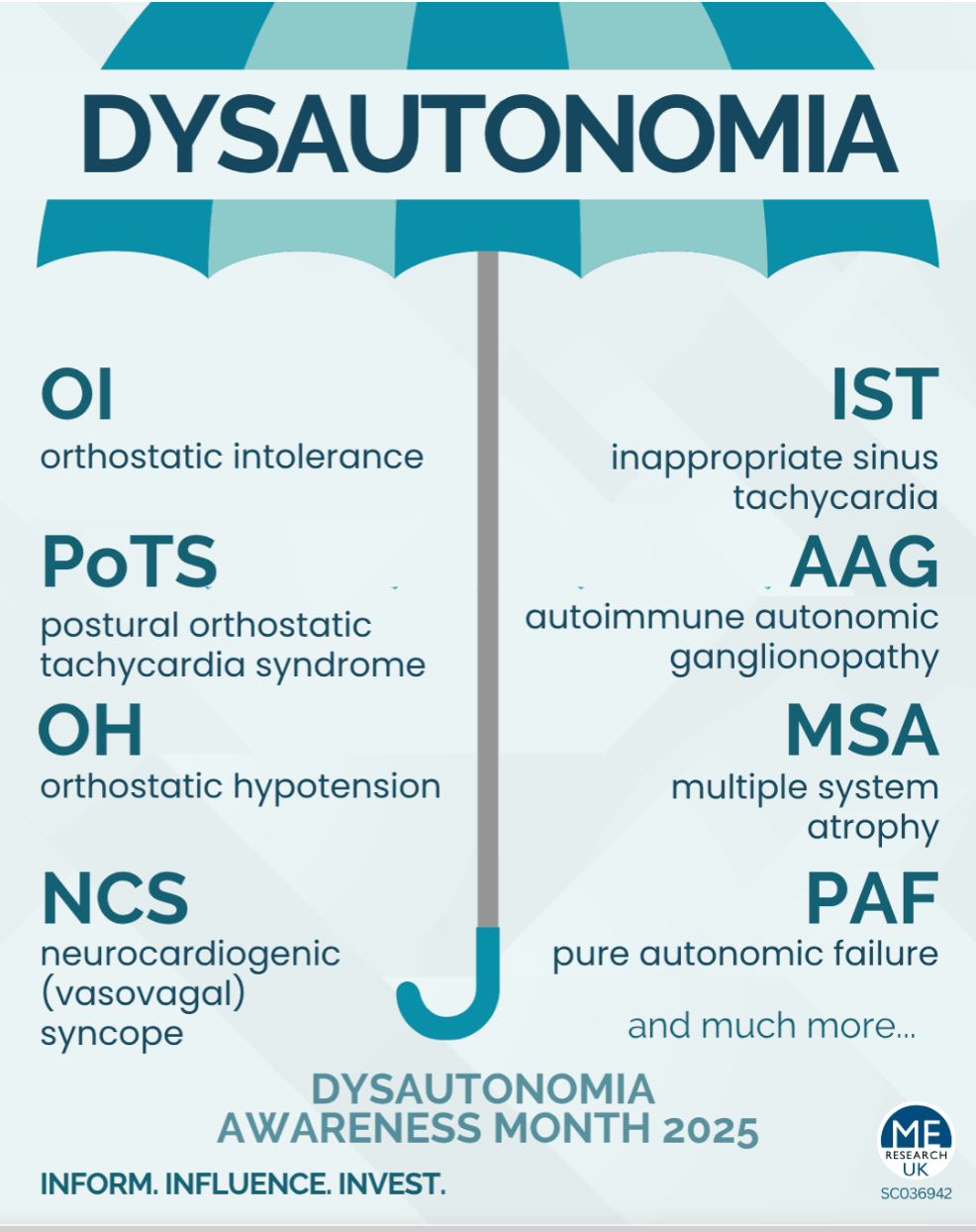
What is Dysautonomia?³
What is POTS? How is it Related to Dysautonomia?
POTS is a condition that affects the body's ability to regulate heart rate and circulation when changing positions. This condition primarily affects younger people aged 15 to 45 years old, with about 80% of affected patients being female.⁴
When you stand up, gravity causes some blood to pool in your lower body. Normally, your ANS responds by narrowing blood vessels and slightly increasing your heart rate to make sure enough blood gets to your brain.
But in people with POTS, this ANS response doesn't function properly. As a result, the heart rate increases excessively upon standing, often causing symptoms like dizziness, palpitations, and fatigue.
It's important to note that POTS is a form of dysautonomia, but not everyone with dysautonomia has POTS.
What Are the Symptoms of POTS?
Although POTS is often associated with heart-related symptoms, it can cause symptoms throughout the entire body. This is because it's a disorder related to autonomic dysfunction, and the ANS regulates numerous bodily functions.
Symptoms of POTS include:⁵
Dizziness or lightheadedness, particularly when standing up or remaining upright for prolonged periods
Palpitations or a racing heart
Chronic fatigue
Brain fog
Trouble concentrating
Exercise intolerance
Headaches
Digestive problems like nausea, bloating, abdominal cramping/discomfort, constipation, or diarrhea
Trouble sleeping
Cold or heat intolerance
Tremors
Mood changes like anxiety and depression
Fainting or feeling like you're about to faint
Vision changes, such as blurred vision
Symptoms often worsen with prolonged standing, hot weather, dehydration, illness, or physical exertion.
The severity of symptoms can vary significantly. Some people with POTS experience relatively mild symptoms, while others find that POTS interferes with their ability to work, exercise, or complete daily activities.
What Causes POTS?
The exact cause of POTS isn't completely understood, but researchers have identified several underlying mechanisms in the body that may contribute to its development, including:⁵
Excessive sympathetic nervous system activity: An overactive fight-or-flight response can cause an exaggerated increase in heart rate and symptoms such as palpitations, shakiness, and sweating.
Peripheral autonomic nerve dysfunction: Impaired nerve signaling can prevent blood vessels from constricting properly, which allows blood to pool in the lower body when standing. This can then cause the heart to beat faster to compensate.
Blood volume dysregulation: Lower circulating blood volume can cause the heart to beat faster to make sure enough blood gets to areas like the brain when standing.
Cardiovascular deconditioning: Reduced cardiovascular fitness can decrease the amount of blood pumped with each heartbeat, which can worsen symptoms upon standing.
Immune system dysfunction: Researchers are examining the possibility that POTS may have an autoimmune component in some patients.
These mechanisms can overlap, meaning that more than one may contribute to a person's symptoms. This is one reason why treating POTS can be so challenging and why patients may respond differently to treatment.
What Can Trigger or Contribute to the Development of POTS?
Although POTS sometimes develops without an identifiable cause, certain illnesses, events, and medical conditions have been associated with its onset.
Viral Infections
POTS can develop following viral illnesses, including COVID-19 and other infections. Researchers have proposed that post-infectious immune responses, inflammation, and changes in ANS function may contribute to this.⁵
Some studies suggest that about 30% to 40% of patients develop POTS symptoms following an infection, such as COVID-19, Epstein-Barr Virus, or influenza.⁵
Surgery or Trauma
Some patients develop POTS following surgery, significant trauma, or a serious illness. Prolonged bed rest and reduced physical activity during recovery may also contribute to orthostatic intolerance.⁴
Pregnancy and Hormonal Changes
POTS is more commonly diagnosed in women, particularly during their reproductive years. Some patients report developing symptoms during pregnancy or during other periods of significant hormonal changes, such as puberty.⁴⋅⁶
Researchers are still investigating the relationship between hormones and POTS, but it's theorized that these hormonal shifts cause changes in blood volume, circulation, and autonomic regulation.
Associated Medical Conditions
POTS frequently occurs alongside other medical conditions that may share similar symptoms or contribute to autonomic dysfunction. Some of these conditions include:⁴⋅⁵
Mast cell activation syndrome (MCAS)
Hypermobile Ehlers-Danlos syndrome (hEDS) and hypermobility spectrum disorders (HSD
Autoimmune disorders such as Sjogren's syndrome and Hashimoto thyroiditis
Fibromyalgia
Long COVID
Chronic migraines
Irritable bowel syndrome
Myalgic encephalomyelitis/chronic fatigue syndrome (ME/CFS)
Although these conditions may coexist with POTS, that doesn't necessarily mean they cause it. However, recognizing and managing associated conditions can help providers develop a more comprehensive, personalized treatment plan.
How is POTS Diagnosed?
When POTS is suspected, there are a few ways to test for it. Two commonly used methods are the tilt table test and the active stand test.
Tilt Table Test
During a tilt table test, you're secured to a table that gradually tilts from a flat, horizontal position to an upright position. Your heart rate, blood pressure, and symptoms are monitored closely throughout the test to see how your body responds to changes in posture.
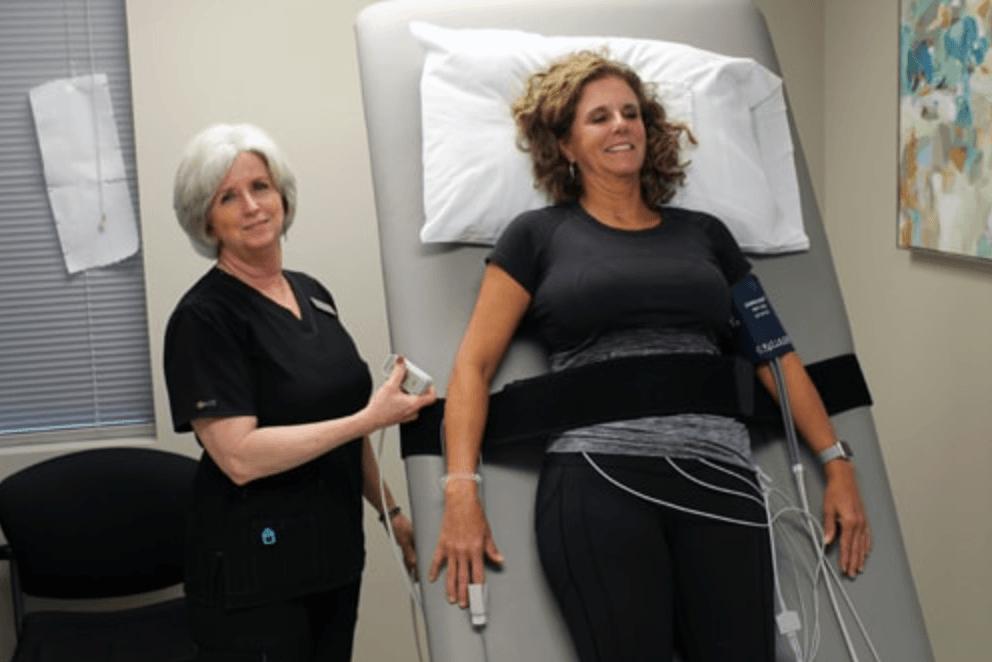
Tilt Table Test (Head Up Tilt)⁷
Tilt table testing is the gold standard for diagnosing POTS, but it isn't required for every patient and may not be easily available.
Active Stand Test
Another way to test for POTS that's readily available is an active stand test.⁸ This can often be done in a medical office, as it doesn't require any specialized equipment.
During this test, you'll first have your heart rate and blood pressure checked after lying on your back for 10 minutes. Then, you'll stand up and have your heart rate and blood pressure checked at one minute, three minutes, five minutes, and 10 minutes.
Diagnostic Criteria for POTS
To be diagnosed with POTS, adults must have a sustained increase in heart rate of at least 30 beats per minute within the first 10 minutes of standing without a significant drop in blood pressure.⁸ For adolescents ages 12-19, the threshold is at least 40 beats per minute.⁵
Symptoms must also be present for at least three months, worsen when upright, and improve when lying down. Additionally, other conditions that could explain the elevated heart rate must be excluded.
How is POTS Managed and Treated?
While there isn't one single treatment that works for every patient, there are many ways to manage POTS symptoms and improve quality of life.
Management of POTS typically involves a combination of lifestyle modifications, physical conditioning, and sometimes medications. It's also important to identify and address any underlying or coexisting conditions that may be contributing to symptoms.
Please note that these are general guidelines for those with POTS and should not replace individualized medical advice.
Hydration
Drinking more fluid is one of the cornerstones of managing POTS. Many patients with POTS should aim to drink a minimum of two to three liters of water a day.⁵
When drinking this amount of fluid, it's important to spread your fluid intake out throughout the day rather than drinking large amounts at once, as this can cause nausea or stomach discomfort in some people.
Increase Salt Intake
Increasing dietary salt can help some patients with POTS retain fluid, which can help symptoms. For many of my patients, I recommend increasing salt intake to as much as 10 grams a day, which is equivalent to about four grams of sodium.⁵
Some tips to increase salt in your diet include adding a pinch of Himalayan Sea salt to water, chewing on pink Himalayan Sea salt chunks, or adding electrolyte replacements.
Add Electrolyte Supplements
Electrolyte supplements can also help patients meet their fluid and sodium goals. Some products I recommend include:
NUUM tablets
SaltStick chewables or capsules
Hydrant hydrate
Kinderlyte solution
I typically recommend using these two to four times a day and as needed for symptoms.
Compression
Compression garments can help prevent blood from pooling in the lower body when standing.⁵ Waist-high compression stockings or garments that provide abdominal compression are often more effective than knee-high stockings alone.
For compression support for POTS, I recommend using 20-40 mmHg garments.
For those whose symptoms worsen after eating, abdominal compression may provide additional relief. Some patients find that the SPANX Waist Cincher works well for this.
Exercise and Physical Conditioning
A gradual increase in exercise over several months can help improve cardiovascular conditioning and reduce symptoms in some patients with POTS.
If you have trouble remaining upright for any activity, I suggest starting with exercises like rowing, recumbent cycling, or swimming. You can gradually increase the intensity and duration of exercise based on how your body responds.⁵
Trigger Management
For many people, limiting caffeine and alcohol, avoiding excessive heat exposure, staying hydrated, and getting enough sleep can help improve POTS symptoms.⁵
But because triggers vary from person to person, identifying what your triggers are can have a huge impact on managing your symptoms. Keeping a symptom log or journal can help you recognize patterns and identify any triggers you may have.
Nutrition and Lifestyle Modifications
In addition to hydration and exercise, certain dietary and lifestyle changes may help manage symptoms, especially for those who feel worse after eating. Here are some tips:
Eat smaller, more frequent meals
Incorporate more low-glycemic-index foods, protein, and healthy fats
Avoid liquids for 30 minutes before and after meals
Lie down for 30 minutes after meals (this may help reduce symptoms like palpitations, flushing or dizziness that occur after eating)
Elevate the head of your bed frame six to eight inches with objects such as cinder blocks or books
Practice good sleep hygiene by turning down lights and avoiding screens for two hours before bed, keeping electronics out of the bedroom, and keeping the bedroom completely dark and cool.
Medications for POTS
Some patients continue to have daily symptoms from their POTS despite making lifestyle changes. For these patients, there are several prescription medications available:⁸
Fludrocortisone: Helps the body hang onto more salt and fluid, which can help support blood volume and blood pressure.
Midodrine: Narrows blood vessels (vasoconstriction), which can help raise blood pressure.
Propranolol and metoprolol: Beta-blockers that may help keep reduce excessive increases in heart rate when standing.
Pyridostigmine: Helps reduce excessive increases in heart rate by increasing levels of a chemical called acetylcholine.
New and Emerging Treatments for POTS
As researchers continue to learn more about POTS, new treatments are being investigated that target the underlying causes of autonomic dysfunction.
Immunotherapy
Emerging research suggests that autoimmune dysfunction may play a role in some cases of POTS. This has led researchers to investigate whether treatments that help regulate the immune system, like intravenous immunoglobulin (IVIG), could help improve symptoms.⁹
Although some early studies have reported benefits, clinical trial results have been mixed. More research is needed to determine whether immunotherapy may be effective for specific groups of patients with POTS.
Vagus Nerve Stimulation
Another emerging treatment being studied is noninvasive vagus nerve stimulation. This uses mild electrical impulses to stimulate the vagus nerve, which is an important part of the parasympathetic nervous system.
A small 2024 clinical trial found that patients receiving vagus nerve stimulation had a smaller increase in heart rate upon standing compared to those not receiving treatment. Researchers also observed improvements in markers of autonomic function and inflammation.¹⁰
More recently, a 2026 study examined patients with hyperadrenergic POTS, a form of POTS associated with excessive sympathetic nervous system activity. Researchers found that vagus nerve stimulation improved ANS regulation and orthostatic symptoms after just two weeks.¹¹
While these findings are encouraging, larger studies are still needed to determine the long-term safety and effectiveness of vagus nerve stimulation for POTS.
Take the Next Step Toward Managing Your POTS and Dysautonomia
Living with POTS can be challenging, especially when symptoms affect multiple areas of your body and interfere with everyday activities. But with the right diagnosis and an individualized treatment plan, many patients can have meaningful improvements in their symptoms and quality of life.
At Wisdom Way Medicine in Portland, Oregon, I specialize in treating patients with POTS, dysautonomia, and other complex chronic medical conditions. I work with patients to better understand their symptoms and develop personalized treatment plans that address their unique health needs.
If you're experiencing symptoms of POTS or dysautonomia and are looking for answers, contact Wisdom Way Medicine today to schedule an appointment.
FAQs: Postural Orthostatic Tachycardia Syndrome (POTS) and Dysautonomia
-
Some people with POTS have significant improvement in their symptoms over time, while others may continue to have symptoms for years. Although there's currently no cure for POTS, lifestyle changes, medications, and treatment or associated conditions can help manage symptoms and improve quality of life.
-
POTS is not currently classified as an autoimmune disease, but new research suggests that immune system dysfunction may play a role in some patients. POTS is also associated with certain autoimmune conditions, including Sjogren's syndrome and Hashimoto thyroiditis.
-
Wearable health trackers like Apple Watches, Fitbits, and Oura Rings can help people with POTS monitor their heart rate, identify potential symptom triggers, and recognize patterns over time. However, these devices cannot diagnose POTS and should be used alongside, rather than in place of, medical evaluation and testing.
References:
1. Postural Orthostatic Tachycardia Syndrome (POTS): A Review – (nih.gov)
2. Anatomy, Autonomic Nervous System – (nih.gov)
3. What is Dysautonomia? – (meresearch.org)
4. Postural orthostatic tachycardia syndrome: clinical presentation, aetiology and management – (wiley.com)
5. Postural Orthostatic Tachycardia Syndrome (POTS) A Review – (jamanetwork.com)
6. Pubertal Hormonal Changes and the Autonomic Nervous System: Potential Role in Pediatric Orthostatic Intolerance – (nih.gov)
7. Tilt Table Test (Head up Tilt) – (mvpctr.com)
8. Postural Orthostatic Tachycardia Syndrome – (nih.gov)
9. Randomized controlled trial of intravenous immunoglobulin for autoimmune postural orthostatic tachycardia syndrome (iSTAND) – (nih.gov)
10. Noninvasive Vagus Nerve Stimulation in Postural Tachycardia Syndrome – (nih.gov)
11. Short and long term effects of a two-week transcutaneous vagus nerve stimulation in hyperadrenergic postural orthostatic tachycardia syndrome: a proof-of-concept trial – (nih.gov)