Have you ever felt like your body is reacting to everything but no one can explain why?
Maybe you've seen multiple specialists, had countless tests run, and have been told everything looks normal.
Yet you continue to struggle every day.
For many people living with Mast Cell Activation Syndrome (MCAS), this experience is all too familiar.
MCAS is a complex condition that can affect multiple body systems with symptoms that range from digestive issues and skin reactions to fatigue, brain fog, headaches, and environmental sensitivities. Because symptoms can vary so widely from person to person, many people spend years searching for answers before receiving a diagnosis and proper treatment.
In this article, we'll explore what MCAS is, why mast cells become overactive, and how the Epithelial Barrier Theory may help explain the underlying factors that contribute to chronic mast cell activation.
What Is Mast Cell Activation Syndrome (MCAS)?
To understand MCAS, it helps to first understand what mast cells are.
Mast Cells: The "First Responders"
Mast cells are specialized immune cells that, like other immune cells, are made in the bone marrow.¹ They're found in all areas of the body except the central nervous system (brain and spinal cord) and the retina of the eye. Mast cells are highly concentrated in places that come into contact with the outside world like the:
Gastrointestinal tract
Skin
Respiratory tract
Sinuses
When it comes to describing the function of mast cells, it's easiest to think of mast cells as the body's first responders. Their job is to detect potential threats like an infection or cut on the skin and then coordinate an immune response. When mast cells are healthy and functioning well, they help protect our bodies from infections, allergens, toxins, and injury.
However, if mast cells become overly sensitive or activate at the wrong time, it can become a real problem.
What Happens in MCAS?
When mast cells activate, they release chemical messengers called mediators. These mediators create a localized immune and inflammatory response to help the body protect itself from a detected threat.
One of the most well-known mediators released by mast cells is histamine. But mast cells release many other compounds as well, including:¹
Tryptase
Leukotrienes
Prostaglandins
Cytokines
Heparin
If mast cells are overly sensitive and activate too often, the body becomes exposed to excessive amounts of these mediators. More mediators means more inflammation, and more inflammation means more MCAS-related symptoms.
Symptoms of MCAS
Because of the nature and different locations of mast cells, symptoms of MCAS can vary significantly from person to person.
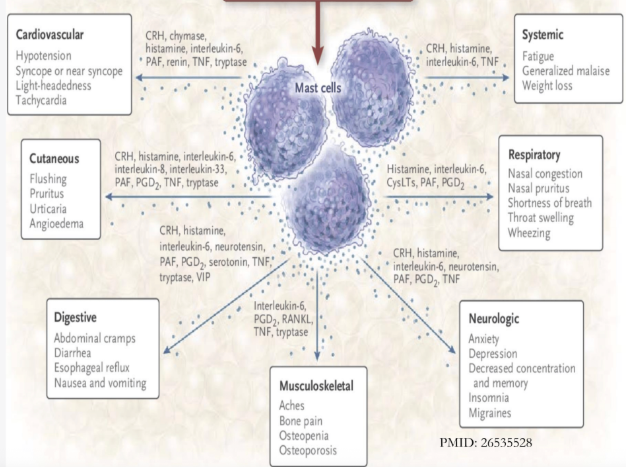
Mast Cells, Mastocytosis, and Related Disorders²
As shown in the picture above, the symptoms of MCAS can present in several different body systems. Common symptoms of MCAS include:²
Hives, itching, flushing, or swelling
Food sensitivities
Bloating, diarrhea, constipation, or abdominal pain
Brain fog and difficulty concentrating
Headaches and dizziness
Rapid heart rate or blood pressure fluctuations
Fatigue and insomnia
Sensitivities to medications, chemicals, fragrances, or environmental exposures
Some patients also experience sinus inflammation, asthma-like symptoms, nerve pain, ringing in the ears (tinnitus), abnormal bleeding, delayed skin healing, joint pain, or muscle pain.
This wide range of symptoms is one reason why MCAS is so often missed. A patient may see multiple specialists for different symptoms without anyone connecting them back to one problem with the immune system.
Common MCAS Triggers
One of the hallmarks of MCAS is that symptoms are often triggered by certain exposures. While these triggers vary from person to person, some of the most common ones include:
Heat, cold, or sudden temperature changes, including sun exposure
Emotional stress, physical stress, pain, fatigue
Certain foods and beverages like alcohol, food additives, preservatives, and artificial food dyes
Strong odors, perfumes, fragrances, and chemical scents
Venoms from insects and other animals
Viral, bacterial, and fungal infections
Mechanical irritation, friction, pressure, or vibration
Radiation and exposure to electromagnetic fields
Exercise and strenuous physical activity
Not everyone with MCAS reacts to the same triggers. In fact, two people with MCAS often have completely different trigger patterns. This is one reason the condition can be so challenging to recognize and diagnose.
While identifying triggers can help reduce symptoms, it still doesn't answer the bigger question: what causes mast cells to become so reactive in the first place?
The Epithelial Barrier Theory: A New Way to Understand MCAS
The Epithelial Barrier Theory offers one possible explanation for why mast cells become inappropriately activated and overly sensitive.
The epithelial barrier is made up of epithelial tissue, which forms a protective covering on surfaces throughout the body. This includes the lining of the gut, skin, lungs, sinuses, and other tissues that meet the outside world.³
Epithelial tissue has many functions depending on where it's located, but one of its most important roles is acting like a filter for the body. This tissue allows nutrients and other beneficial substances to pass into the body while keeping out harmful organisms, toxins, allergens, and inflammatory substances.
But when this protective barrier becomes compromised and breaks down, substances that would normally remain outside the body can enter, which activates the immune system.
Here's an example of how this looks in the epithelial barrier in the sinuses:
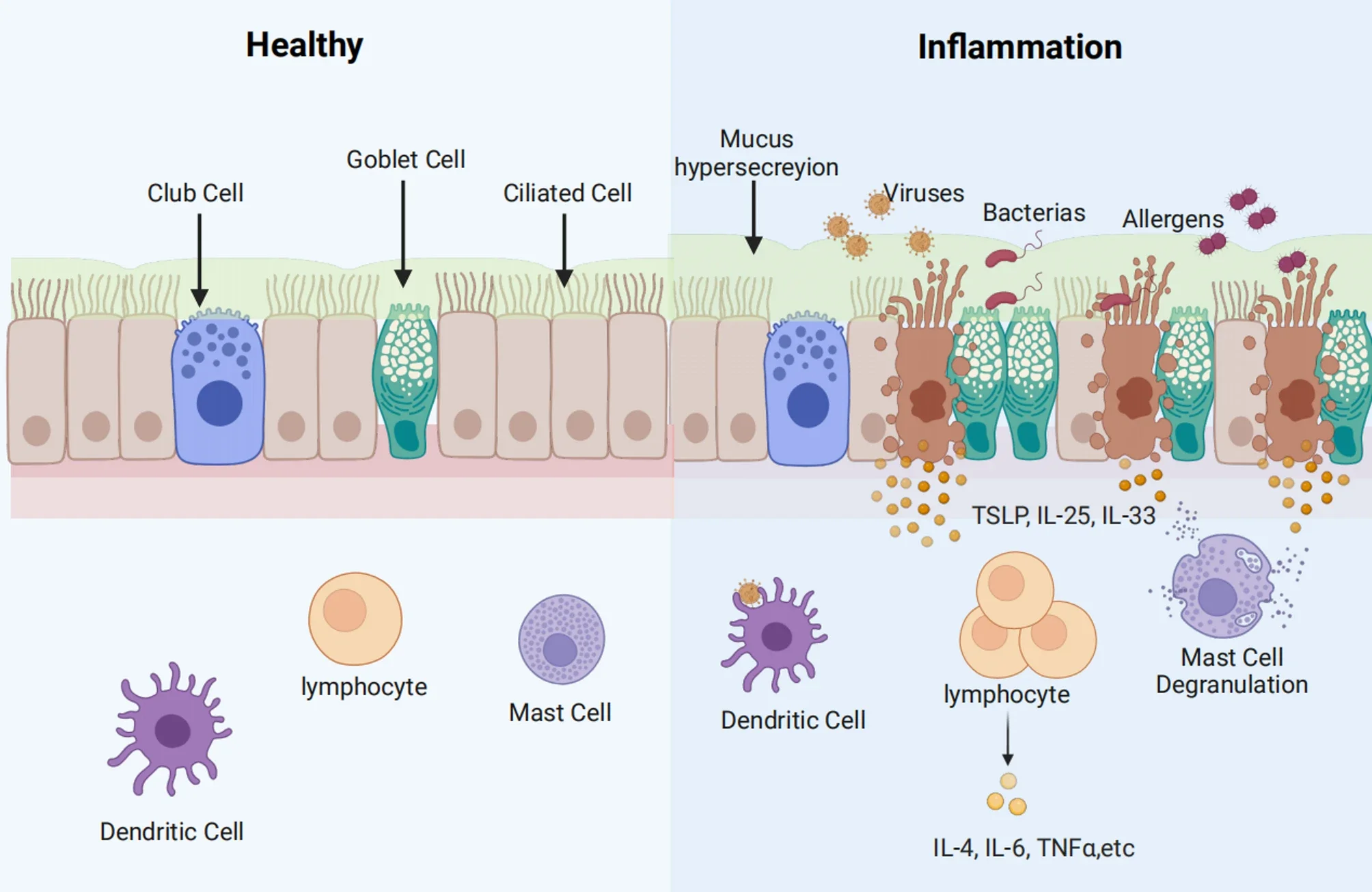
Crosstalk Between Airway Epithelial Cells and Mast Cells in Airway Inflammation⁴
What Causes Damage to the Epithelial Cells?
Several factors can disturb epithelial barriers and contribute to immune activation, including:³
Genetic defects or mutations in barrier proteins
Exposure to pollutants, chemicals, and other environmental factors
Disruption of the microbiome (the healthy bacteria in our body)
Chronic infections
Inflammation in the epithelial barriers from conditions like asthma, dermatitis, rhinitis, sinusitis, and colitis
Also, many of the chemical agents found in common household products are known to damage these critical barriers. Some examples of these products are toothpaste, shampoo, detergents, and processed foods.
The Link Between the Epithelial Barrier and Mast Cells
Mast cells are highly concentrated near epithelial surfaces because these are the areas near the outside world. Their job is to constantly monitor the environment for threats. So when the epithelial tissue is damaged, mast cells respond to toxins, allergens, organisms, or inflammatory substances that leak through the barrier.
This can create a vicious cycle.
Damaged epithelial barrier → increased exposure to environmental toxins and harmful organisms → mast cell activation → inflammation → more damage to the epithelial barrier → more mast cell activation...and so on.
Over time, this cycle may cause mast cells to become increasingly reactive and overly sensitive.
From the perspective of the Epithelial Barrier Theory, MCAS may not simply be a disorder of mast cells. Instead, mast cell activation may represent a response to ongoing stress in the immune system from dysfunction of the epithelial barrier.
So in other words, mast cells may not be the root problem. Instead, they may be responding to a larger problem occurring somewhere else in the body.
The Connection Between the Gut and Mast Cells
One of the most common areas that mast cell dysfunction can stem from is the gastrointestinal (GI) tract. The GI tract is one of the largest parts of the immune system, holding about 70-80% of the body's immune cells.⁵ This includes mast cells, which are heavily concentrated along the intestinal lining.
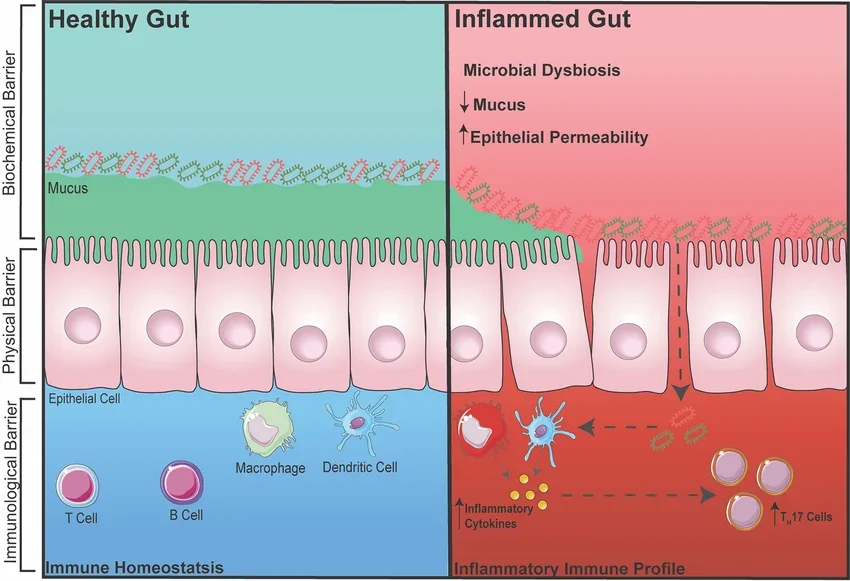
Healthy Gut, Healthy Bones: Targeting the Gut Microbiome to Promote Bone Health⁶
Conditions like Small Intestinal Bacterial Overgrowth (SIBO), Irritable Bowel Syndrome (IBS), food sensitivities, and Leaky Gut Syndrome are commonly seen alongside MCAS.⁷⋅⁸ Because of this close link, gut health is a key component of a comprehensive approach to the treatment of MCAS.
The Tipping Point: Why MCAS Often Appears Suddenly
For many patients with MCAS, their symptoms seem to appear overnight. Many patients can identify a specific event that triggered their symptoms like:
A viral illness, especially COVID-19
Toxin exposure, such as mold or heavy metals
Major emotional stress
Pregnancy or hormonal changes
A specific environmental toxin exposure
While these events may appear to cause MCAS, they're often better viewed as the final trigger that pushes the immune system past its limit.
An easy way to think of this is to think of your immune system as a bucket that slowly fills over time.
Each of the following can add water to the bucket:
Chronic infections
Environmental toxins
Mold exposure
Chronic stress
Poor sleep
Gut dysfunction
Chemical and toxin exposures
For years, the bucket may continue filling without obvious symptoms. But then one additional stressor causes the bucket to overflow.
From the patient's perspective, symptoms seem to appear suddenly. However, the underlying dysfunction may have been slowly developing for years.
This concept helps explain why so many individuals report becoming so ill after a viral infection, mold exposure, or another major life event. These events may be the final factor that overwhelms an already stressed immune system.
A Whole-Body Approach to MCAS at Wisdom Way Medicine
Conventional treatments such as antihistamines and mast cell stabilizers may be helpful for reducing the symptoms of MCAS. However, unless we fix the underlying problem that's driving the mast cells to be overreactive, those with MCAS won't find lasting relief.
This is where functional and naturopathic medicine practitioners like myself take a different approach.
Rather than focusing only on treating the symptoms, it's important to look for the underlying stressor that may be keeping the immune system activated.
This may include evaluating:
Gut health and intestinal permeability
Mold exposure
Heavy metals and environmental toxins
Chronic viral, bacterial, fungal, or parasitic infections
Nutritional deficiencies
Hormone imbalances
Treatment is highly individualized because everyone's triggers are different. For one person, mold exposure may be a major driver. And for another, chronic gut dysfunction, post viral illness, or chemical sensitivity may be their main cause.
When it comes to treating MCAS, there's quite a bit involved. But it's important to remember to take it one step at a time. Treatment often involves:
Stabilizing mast cells
Correcting dysautonomia/Postural Orthostatic Tachycardia Syndrome (POTS) symptoms
Repairing the gut
Lowering environmental exposures
Supporting the immune system
Correcting detoxification pathways
Treating chronic infections
Addressing nutrient deficiencies
Supporting hormones
Making diet adjustments
Do You Have Symptoms of MCAS?
MCAS can be difficult to recognize, even by some of the most experienced physicians. This is because it affects multiple body systems and often presents differently from person to person. Symptoms such as digestive issues, food sensitivities, skin reactions, fatigue, brain fog, headaches, and environmental sensitivities may all be connected to underlying mast cell activation.
If you're struggling with symptoms that sound like MCAS, a comprehensive evaluation at Wisdom Way Medicine may help.
By taking a root-cause approach, we work with you to identify the underlying factors that may be contributing to mast cell cell activation, including:
Gut dysfunction
Chronic infections
Environmental exposures
Immune dysregulation
Contact our office today to schedule an appointment and take the first step toward finding answers and improving your health.
FAQs: Mast Cell Activation Syndrome (MCAS)
-
MCAS can cause a wide variety of symptoms that affect multiple body systems. Common symptoms include:²
Food sensitivities
Hives
Itching
Flushing
Digestive issues
Fatigue
Brain fog
Headaches
Dizziness
Rapid heart rate
Sensitivity to medications, fragrances, or certain environmental exposures
-
There's no single test that can definitively diagnose MCAS. Instead, diagnosis typically involves looking for a combination of symptoms, response to treatment, and laboratory testing. When diagnosing MCAS, we look for the following:
Symptoms affecting two or more body systems
Improvement with mast cell-targeted treatments
Evidence of mast cell mediator release through blood or urine testing
Because these mediators break down quickly and can be difficult to capture, many people with MCAS are diagnosed through a combination of clinical findings and laboratory testing.
-
No, MCAS isn't considered an autoimmune disorder. Instead, it's a condition involving inappropriate activation of mast cells, which are part of the immune system. However, MCAS can occur alongside autoimmune conditions and other immune-related disorders.
-
Treatment for MCAS often focuses on reducing mast cell activation, identifying triggers, and managing symptoms. Depending on the person, this may include antihistamines, mast cell stabilizers, dietary modifications, and addressing underlying factors like gut dysfunction, chronic infections, environmental exposures, or nutrient deficiencies.
-
MCAS involves the inappropriate activation of mast cells, while mastocytosis involves an abnormal increase in the number of mast cells in the body. Mastocytosis is considered a rare disorder and is typically diagnosed through specialized testing. On the other hand, MCAS is characterized by a normal amount of mast cells that are overly reactive.
-
While symptoms may seem to appear suddenly, MCAS often develops after years of cumulative stress on the immune system. Many people notice that symptoms begin after a triggering event such as an infection, mold exposure, significant stress, hormone changes, or another major health challenge.
References:
1. Histology, Mast Cells – (nih.gov)
2. Mast Cells, Mastocytosis, and Related Disorders – (nejm.org)
3. The Story of Epithelial Barrier Theory – (epithelialbarriertheory.com)
4. Crosstalk between airway epithelial cells and mast cells in airway inflammation – (springer.com)
5. The Interplay between the Gut Microbiome and the Immune System in the Context of Infectious Diseases throughout Life and the Role of Nutrition in Optimizing Treatment Strategies – (nih.gov)
6. Healthy Gut, Healthy Bones: Targeting the Gut Microbiome to Promote Bone Health – (researchgate.net)
7. Official Journal of the American College of Gastroenterology - Volume 114 – (lww.com)
8. The Emerging Role of Mast Cells in Irritable Bowel Syndrome – (nih.gov)