In last month's blog, we discussed the connection between oral health and overall health.
In this blog, we're going to take a closer look at two often overlooked areas in oral health: dental cavitations and dental fillings.
These aren't always obvious problems. In fact, many people don't have clear symptoms in their mouth at all. But because of how closely related the mouth is to the rest of the body, those with dental cavitations or sensitivities to dental fillings can have body-wide inflammation, chronic fatigue, or other unexplained symptoms and medical conditions.
To better understand how this happens, it helps to first look at the basic structure of the teeth and jaw.
Basic Anatomy of the Jaw and Teeth
Each tooth in the mouth is made up of two main parts:
The crown, which is what you see in your mouth
The root, which extends down into the jawbone
The roots are surrounded by bone, blood vessels, and nerves that help keep the tooth and jawbone healthy.
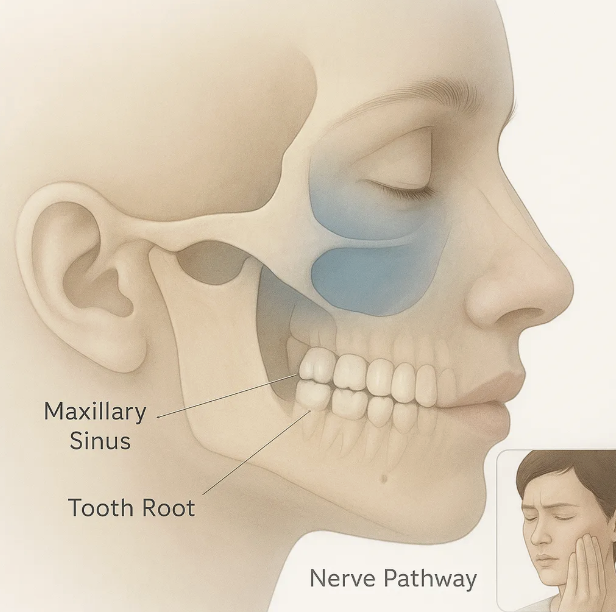
The Hidden Connection Between Your Teeth and Sinuses¹
In the upper jaw, the roots of some of the back teeth are located very close to the maxillary sinuses, which are air-filled spaces located just above the teeth. Because of their close proximity, issues involving the teeth or jawbone can sometimes affect these sinuses.
What Are Dental Cavitations?
Dental cavitations are areas of damaged or unhealthy bone in the jaw that haven't healed properly after trauma from dental work or chronic infection. The most common traumas that cause cavitations are teeth extractions, especially wisdom teeth removal.
Instead of the extraction area fully healing with strong, healthy bone, the area may have:²
Poor blood flow
Soft or weakened bone tissue
Low-grade, chronic inflammation
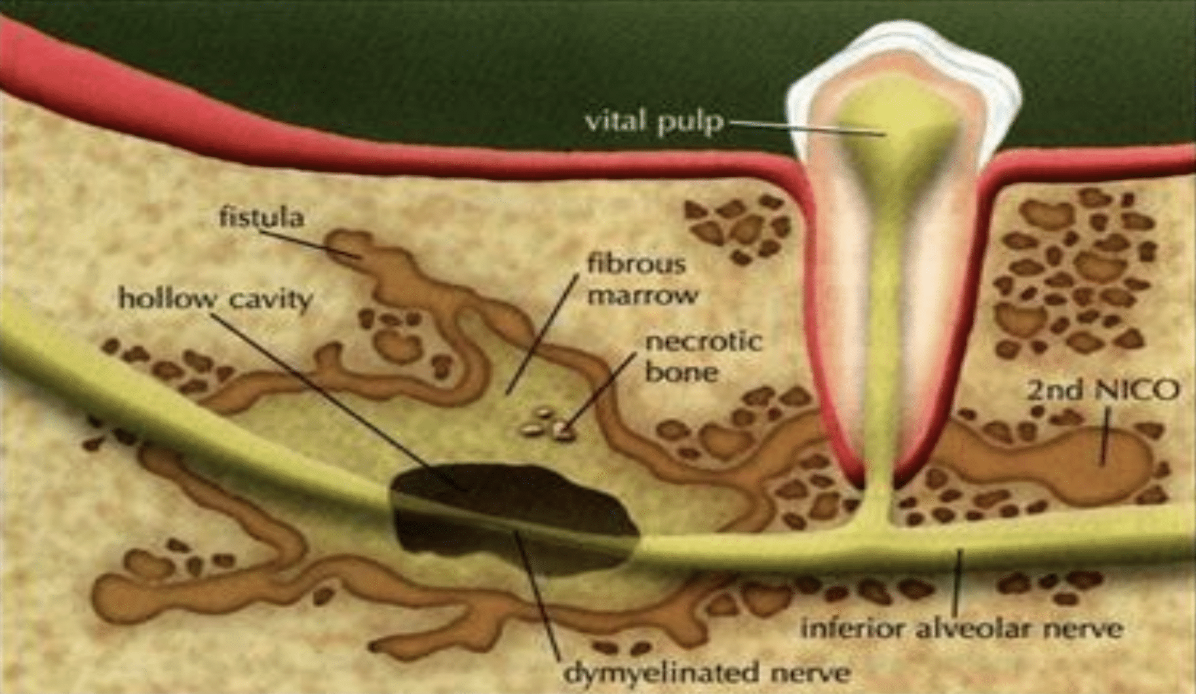
In functional medicine and dentistry, cavitations are often considered "hidden infections" because they can exist without obvious signs or symptoms. But that doesn't mean they don't have serious health implications.
How Dental Cavitations Develop
Dental cavitations may form when the jawbone doesn't fully heal after trauma, such as a tooth extraction. When healing is incomplete, the bone may have reduced blood flow and oxygen supply. This creates an environment where damaged tissue or low-grade infection can persist.
Other factors that may contribute to the development of dental cavitations include:
Damage to bone during dental procedures: Excess heat from cutting drills can damage bone tissue
Spread of infection into the jawbone: A tooth abscess (a pocket of infection next to the tooth) can extend into the surrounding bone
Persistent infection at the root of a tooth: After procedures like root canals (which remove infected tissue inside the tooth), infection-causing bacteria may sometimes remain
Peri-implantitis: Inflammation and bone loss around a dental implant may weaken and damage the surrounding bone over time³
In some cases, materials used during root canal procedures can extend beyond the tip of the tooth root and into nearby structures. For upper teeth, this may include the maxillary sinuses, which are right above their roots. This type of complication from root canals has been documented in studies and, in certain cases, may contribute to conditions like chronic sinusitis.⁴
Why Cavitations Are Often Missed
One of the biggest challenges with dental cavitations is that they can be difficult to detect. This is because they often:
Don't show up on standard dental X-rays
Can cause vague or nonspecific symptoms--or even no symptoms at all because often the nerve is no longer there to send pain signals to the brain
Your dental provider doesn’t believe that this is a real pathology
Because of this, cavitations may go unnoticed for years.
Organizations like the International Academy of Oral Medicine and Toxicology (IAOMT) have thoroughly researched jawbone cavitations. The IAOMT is a professional organization that provides education and training for dentists who take a more biologic, whole-body approach to oral health. This is often referred to as biologic or integrative dentistry.
The IAOMT has published position papers discussing jawbone cavitations, describing them as a form of chronic bone disease. These papers also highlight the challenges in identifying cavitations with standard imaging.²
Typically, more advanced imaging like a cone beam computer tomography (CBCT) scan is needed to detect cavitations. In many cases, cavitations are discovered incidentally, meaning they're found while imaging is being done for another reason.
For example, one study evaluating CT scans of the sinuses found that 51% of patients had underlying dental conditions.⁵ This highlights how common dental issues can be, even when they're not the primary concern.
Common Types of Dental Fillings and Materials
Cavitations are just one piece of the puzzle. Another often overlooked factor in oral health is the type of materials used in dental work. Fillings, crowns, and implants can all introduce different substances into the body, which can cause reactions in the body over time.
The IAOMT has also published position papers discussing the potential health effects of mercury found in dental amalgam fillings. These reports highlight that these fillings are a source of ongoing mercury exposure and review how mercury can be absorbed and distributed throughout the body.⁶
Amalgam (Metal) Fillings
Amalgam fillings have been used for decades and are made from a mixture of metals, including:⁷
Mercury
Silver
Tin
Copper
Zinc
These fillings are durable and widely used, and many people tolerate them well. However, some people may be more sensitive to long-term metal exposure.
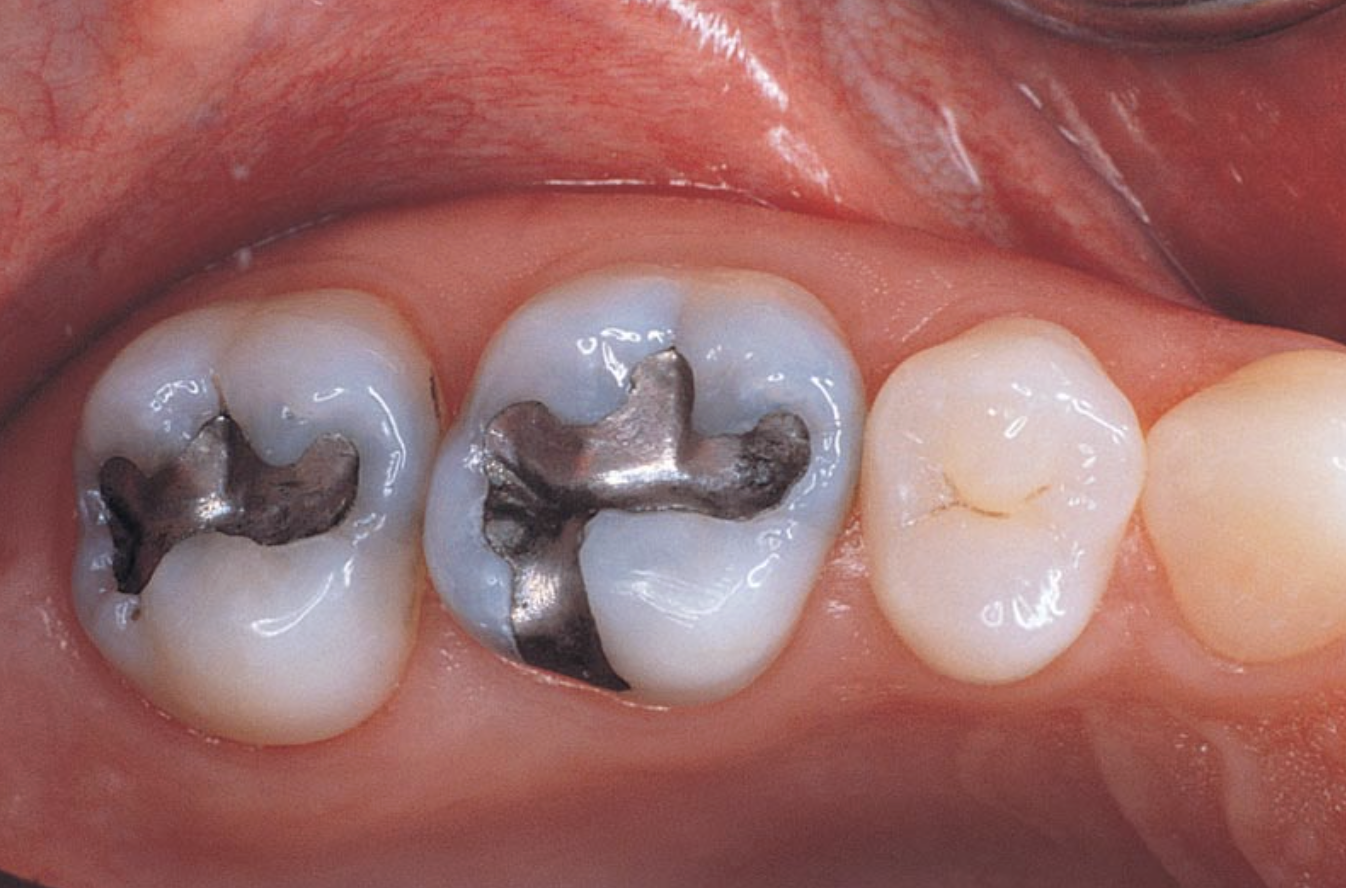
Do I Need to Worry About My Amalgam Dental Fillings?⁸
Metal Crowns and "Noble Metals"
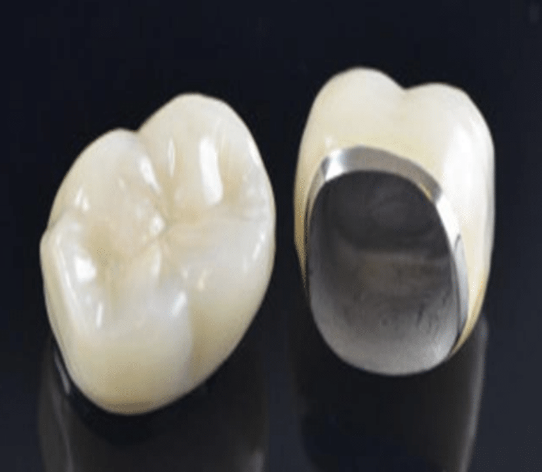
Many dental crowns are built on a metal base which is often made from a combination of noble metals like:
Gold
Palladium
Platinum
These noble metals make up about 25-40% of the crown base, and then other metals are added in for durability. A commonly used metal in crowns is nickel, which is a known allergen and may trigger immune responses in those with an allergy or sensitivity.
Dental Implants
Dental implants are another important piece to consider when looking at oral health.
They're commonly used to replace missing teeth and are designed to function similarly to natural tooth roots. An implant is typically placed directly into the jawbone.
Most dental implants are made from titanium. Like fillings and crowns, dental implants are designed to remain in the body long-term.
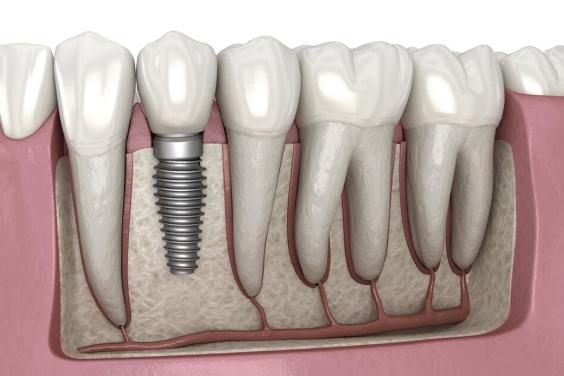
Dental Implant⁹
How Dental Cavitations and Filling Materials Affect Whole-Body Health
Now that we've reviewed both cavitations and dental materials, let's look at how they may impact the body as a whole.
While cavitations and dental materials are different issues, they can both contribute to chronic, low-grade stress on the body. This is especially the case in those dealing with unexplained, body-wide symptoms or medical conditions.
Systemic Effects of Dental Cavitations
Cavitations may act as areas of ongoing dysfunction within the jawbone. While we often think of inflammation as something that causes obvious symptoms like pain or swelling, this isn't always the case.
In fact, many cavitations are asymptomatic, meaning they don't cause noticeable pain in the jaw. Instead, these areas may affect the body through ongoing immune signaling.
Research has shown elevated levels of certain immune-signaling molecules within cavitation tissue. These molecules play a major role in how the immune system communicates and functions.¹⁰
Because of this, cavitations may:
Continuously stimulate the immune system
Contribute to body-wide inflammation
Play a role in chronic inflammatory or autoimmune conditions
This may help explain why some individuals experience whole-body symptoms, even when there are no obvious issues in the mouth itself.
How Dental Materials May Influence the Body
In addition to cavitations, the materials used in dental work may also impact the body outside of the mouth.
Amalgam (Metal) Fillings
Dental amalgam fillings contain a mixture of metals, including mercury. Research shows that about 80% of the mercury vapor from dental amalgam fillings is absorbed by the lungs, which then spreads throughout the body.⁶
Once absorbed in the body, mercury may contribute to overall toxic and inflammatory burden, especially in those who are more sensitive or have additional health conditions.¹¹
Noble Metal Crowns
Many dental crowns are made using metal alloys, including nickel, which is a known allergen. About 10-30% of females and 1-3% of males in the general population have a sensitivity to nickel.
In those with sensitivities, exposure to metals like nickel in the mouth may lead to immune system activation and even flares of conditions like eczema.¹²
Health Effects of Dental Implants
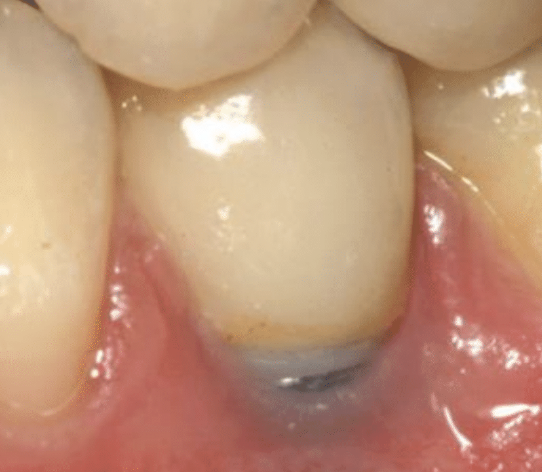
In some cases, patients with dental implants can develop a condition called peri-implantitis. This is a condition that results from inflammation and bone loss around an implant. If peri-implantitis develops, it can affect the stability of the implant and the health of the surrounding bone.¹³
Emerging research suggests that in some people, small particles and ions from titanium implants may be released into surrounding tissues. This is a process called metallosis, and it can occur due to mechanical stress or bacterial buildup (a biofilm) around the implant.
The release of these ions from titanium can result in local inflammation, systemic inflammation, and bone loss around the implant.
Similar reactions have been observed in other areas of medicine, such as with certain metal joint replacements.¹⁴
Because of this, some providers may recommend zirconia (ceramic) implants as an alternative, as they don't release metal ions in the same way as titanium.
Signs and Symptoms to Watch For
Even when dental cavitations or sensitivities to dental materials are present, the signs aren't always obvious. Instead, they often show up as symptoms elsewhere in the body, which makes them easy to miss.
Signs and Symptoms of Cavitations
Because cavitations can contribute to ongoing immune activation and chronic inflammation, symptoms are often not localized to the mouth.
Commonly reported symptoms include:²
Fatigue
Brain fog
Headaches or migraines
Sinus issues
Jaw or facial pain
Tinnitus (ringing in the ear)
Muscle or joint pain
Some people may also have underlying chronic inflammatory or autoimmune conditions. While cavitations aren't always the root cause, they may act as a contributing factor in some cases.
Signs and Symptoms of Sensitivity to Dental Materials
While many people tolerate dental materials without issue, some individuals may be more sensitive to certain metals used in fillings, crowns, or implants.
In these cases, symptoms may include:
Fatigue
Brain fog
Headaches
Skin reactions (like eczema or dermatitis)
Sensitivity or irritation in the mouth
These symptoms can vary widely and aren't always directly linked to dental materials. However, in some people, their symptoms have already been worked up and tested without a clear cause. So in those cases, it's worth considering that a sensitivity to dental material may be contributing.
Final Thoughts on Dental Cavitations and Dental Fillings
Dental cavitations and dental materials are not always the first place people look when trying to understand their health. But in some cases, they may be an important piece of the puzzle.
This doesn't mean that everyone needs to remove fillings or undergo dental procedures. However, for people dealing with persistent or unexplained symptoms, it may be worth taking a closer look at how oral health could be contributing.
In the next and final blog in our oral health series, we'll be discussing the different treatment options for these conditions as well as how to maintain good oral health.
FAQs: Dental Cavitations and Dental Fillings
-
Amalgam fillings can release small amounts of mercury vapor over time, especially with chewing or grinding. While many people don't notice symptoms, some people may have fatigue, brain fog, headaches, or difficulty concentrating. These symptoms aren't specific and can have many causes. But in some cases, mercury exposure may be a contributing factor.
-
Most dental fillings are designed to be durable and are well-tolerated by many people. However, in some people, certain materials may contribute to low-grade inflammation, immune activation, or sensitivity reactions over time. The long-term effects can vary depending on the type of material used and the individual's overall health.
-
Dental cavitations are areas of damaged or unhealthy bone in the jaw that haven't healed properly after trauma, such as a tooth extraction or chronic infection. These areas may have poor blood flow, weakened bone tissue, and low-grade inflammation. Because they often don't show up on standard X-rays or cause symptoms in the mouth, they are some things referred to as "hidden" dental issues.
-
Dental amalgam fillings have been used for many years and though considered safe for most people, the amount of exposure can be a problem for all of our immune systems. These fillings should be reconsidered as a mainstay of use in the dental industry, as they contain mercury. Mercury can be released in small amounts over time and absorbed by the body. While this doesn't affect everyone, it may be worth considering in people with chronic or unexplained symptoms.
Citations:
1. The Hidden Connection Between Your Teeth and Sinuses – (signaturesmilez.ca)
2. IAOMT Position Paper on Human Jawbone Cavitations – (iaomt.org)
3. Peri-implantitis Update: Risk Indicators, Diagnosis, and Treatment – (nih.gov)
4. Foreign body of endodontic origin in the maxillary sinus – (sciencedirect.com)
5. Detection of Dental Pathologies in Routine Paranasal CT Scans: A Retrospective Study – (nih.gov)
6. IAOMT Position Paper Against Dental Mercury Amalgam – (iaomt.org)
7. Roadmap to mercury-free dentistry era: Are we prepared? – (nih.gov)
8. Do I Need to Worry About My Amalgam Dental Fillings? – (turnerdentalcare.com)
9. Dental Implant – (wikipedia.org)
10. Fatty Degenerative Osteonecrosis of the Jaw: Bridging Molecular Insights and Clinical Practice—A Scoping Review – (mdpi.com)
11. Health Effects of Exposures to Mercury – (epa.gov)
12. Oral and Extra-Oral Manifestations of Hypersensitivity Reactions in Orthodontics: A Comprehensive Review – (nih.gov)
13. Osseointegration and osteoimmunology in implantology: assessment of the immune sustainability of dental implants using advanced sonographic diagnostics: research and case reports – (nih.gov)
14. Analysis of Salivary Levels of Titanium and Nickel Levels among Patients Treated with Dental Implants Therapy – (nih.gov)